

Quick Answer: What is the Best Glue for a Lap Joint?
What is a Lap Joint?
Best Adhesive Types for Lap Joints
PVA Wood Glue
Structural Epoxy
Polyurethane Adhesive
Structural Acrylic Adhesive
Cyanoacrylate Adhesive
Hide Glue
Resorcinol and Phenol-Resorcinol Adhesives
Solvent Cement for Compatible Plastics
Flexible Polyurethane and MS Polymer Adhesives
Construction Adhesive
Best Glue for Wooden Lap Joints
Solid Wood
Plywood
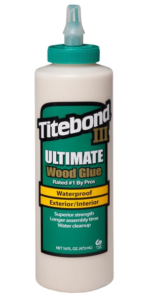
Titebond III Ultimate Wood Glue
MDF and Particle Board
Medium density fiberboard (MDF) and particleboard are types of engineered wood that are regarded as composites rather than solid wood. PVA can work well on broad, sound faces, while edges may absorb the adhesive more readily.
Titebond Original Wood Glue
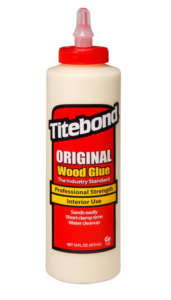
Titebond Original is primarily made for porous materials such as particleboard and hardboard, and it is suitable for unfinished MDF. The PVA formula penetrates exposed wood fibers to form a strong, rigid bond across the broad surface area of a lap joint. It is quick to spread, has strong initial tack, cleans up well with water while wet, and can be sanded during curing. It doesn’t, however, support structural or load-bearing applications. Read the manufacturer’s instructions for complete guidelines regarding use.
Oily or Dense Wood
Dense tropical woods and naturally oily species of wood can be more challenging to bond than ordinary cabinet woods. Their extractives may conflict with wetting, and very smooth machining may leave a burnished surface. The proper preparation depends on the species of wood and the adhesive. Fresh abrasion, prompt bonding, and solvent wiping may be required.
G/Flex 650-8 Toughened Liquid Epoxy
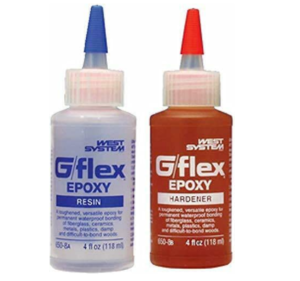
This two-part epoxy and resin hardener is recommended for oily or dense wood. G/flex 650-8 is specially formulated for damp and difficult-to-bond woods, making it suitable for teak, ipe, rosewood, or other oily or dense species. Contrary to water-based glues, the epoxy cures through a chemical reaction and is less dependent on moisture absorption into the wood. It has a liquid and honey-like consistency, which gives it the ability to wet broad mating surfaces of a close-fitting lap joint. It can only accommodate a limited amount of expansion, contraction, shock, and vibration. It uses a 1:1 mixing ratio and provides 75 minutes of working time for full assembly. Machining or sanding is recommended prior to bonding to remove dust and surface oils.
Best Glue for Metal Lap Joints
Because the correct adhesive depends on the material and not just the type of joint, we’ve compiled some recommendations for metal lap joints. Metal lap joints are primarily bonded with structural epoxy or structural acrylic adhesive.
Epoxy is a strong adhesive and useful when a long working time is needed. It can also support controlled gap filling, heat resistance, or chemical resistance. Acrylic is valuable when a faster fixture time is preferred, or if impact resistance is needed.
Surface preparation is very important with metal lap joints. Oil, drawing compound, fingerprints, corrosion, rolling residue, and weak oxide can prevent adhesive from touching the actual metal. Cleaning removes contamination, while abrasion reveals a fresh surface.
3M Scotch Weld DP420 Epoxy Adhesive
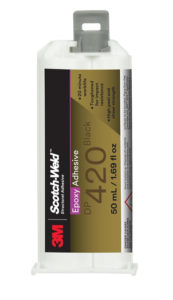
3M Scotch-Weld DP420 is the recommended adhesive for bonded metal lap joints. It is a two-part toughened structural epoxy which is designed to provide high lap shear strength, good impact and fatigue resistance, better peel resistance, vibration resistance, and sufficient working time. It achieves handling strength in 2 hours and reaches full cure within 24 hours at 22°C. It works well with machinery, brackets, metal panels, enclosures, vehicle components, and other metal assemblies.
3M Scotch Weld Acrylic Adhesive DP8507NS
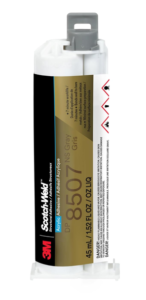
As stated above, a metal lap joint can work well with either a structural epoxy or a structural acrylic adhesive. Structural epoxy is better suited when maximum strength must be achieved, while structural acrylic is suitable when impact resistance is needed. The Scotch-Weld DP8507NS Metal Bonder Adhesive is a two-part toughened structural acrylic designed specifically for metal bonding.
It can support lap joints made from aluminum, cold-rolled steel, stainless steel, galvanized steel, copper, and brass. It can tolerate oily surfaces better than most epoxies, despite cleaning being necessary for surface preparation.
This adhesive provides high shear strength, cures quickly, and contains ceramic particles that help control bond-line thickness. Application requires an applicator and static mixing nozzle. Overall, this is a good adhesive intended for industrial grade applications.
Best Glue for Plastic Lap Joints
Selecting the best glue for plastic lap joints depends on the type of plastic. Two substrates can be made from completely different polymers, and additives such as plasticizers, flame retardants, mold-release agents, glass fibers, pigments, and recycled content can change bondability.
Below we provide individual recommendations based on the type of plastic at hand.
Best Glue for ABS and PVC Lap Joints
ABS plastic, or Acrylonitrile Butadiene Styrene, is a tough, impact-resistant thermoplastic polymer.
SCIGRIP 16 Acrylic Cement
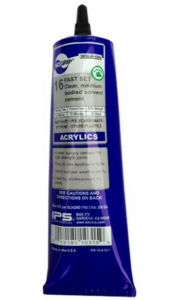
A suitable recommendation is SCIGRIP 16 Acrylic Cement, which is a syrup bodied solvent cement that softens the mating surfaces and forms a fused joint as the solvent evaporates. Its thicker consistency makes application more seamless than a water-thin cement, especially to fill small surface irregularities. SCIGRIP 16 is also suitable for rigid PVC materials.
Plexus MA310
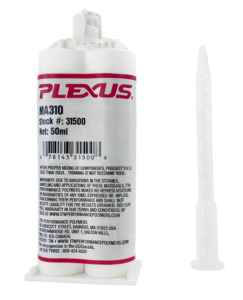
For an ABS joint that carries heavier loads, a structural methacrylate such as Plexus MA310 may be more suitable. This is especially true if the ABS is being joined to metal, acrylic, rigid PVC, or another compatible material. Plexus MA310 is a two-part methyl-methacrylate adhesive that is suitable for structural bonding of thermoplastics, metals, and composites. It provides around 15-20 minutes of working time, fixes in about 30 minutes and can fill gaps up to 0.125 inches.
Surface preparation should ensure the surface is clean, closely fitted, and free from mold-release residue. A solvent cement should not be used as an alternative for filling a large or poorly controlled gap.
Best Glue for Acrylic Lap Joints
SCIGRIP Weld-On #4 Plastic Cement
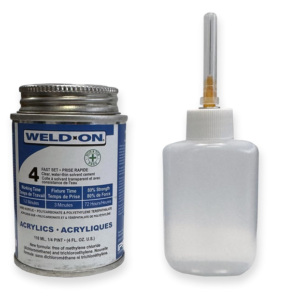
For accurately fitted acrylic or PMMA lap joints, SCIGRIP Weld-On #4 is the recommended product for bonding acrylic. Weld-On 4 is a technically documented solvent cement that is water-thin and intended for capillary application. It works by first positioning the adherends and then insert the cement along the joint edge using a needle applicator. It automatically flows between the surfaces, softens them, and creates a solvent-welded connection. The working time is still short, between 1-2 minutes; fixture time is 1-3 minutes, and it reaches 80% of its final strength within 72 hours. If you wish to avoid whitening or blushing and would like more humidity resistance, Weld-On 4SC is another alternative.
Best Glue for Nylon Lap Joints
3M Scotch-Weld DP8910NS
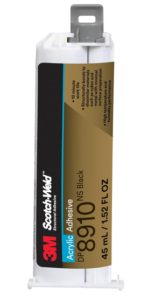
3M Scotch-Weld DP8910NS is a two-part structural acrylic adhesive specifically formulated for bonding nylon, including Nylon 6,6, and Nylon 12. It can also bond between dissimilar materials such as nylon to metal. It has a non-sagging consistency, which helps maintain adhesive placement and bond-line thickness during assembly. Prior to assembly, you may need to clean the nylon with isopropyl alcohol and perform a light abrasion. In addition to this product, you will need the 3M EPX applicator and an orange 10:1 mixing nozzle.
Best Glue for Polyethylene and Polypropylene Lap Joints
Polyethylene and polypropylene have low surface energy, so ordinary epoxy, PVA glue, and common instant adhesive will not wet them properly.
3M Scotch Weld DP8005
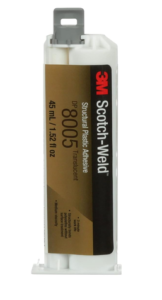
3M Scotch Weld DP8005 Structural Plastic Adhesive is recommended for polyethylene and polypropylene lap joints. It is a two-part acrylic adhesive designed to bond many grades of PE, HDPE, LDPE, PP, TPO, and certain thermoplastic elastomers without the need for flame, plasma, or chemical pretreatment. You will need to secure a 10:1 applicator and mixing nozzle.
Permabond TA4610
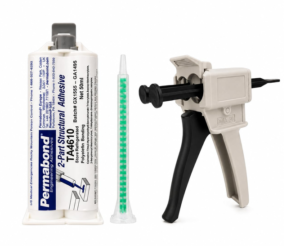
Another recommendation for structural polyethylene and polypropylene that is untreated is the Permabond TA4610. It has a 5-8 minute pot life, 12–15-minute fixture time, and a 0.04-inch gap-filling capability.
The obvious disclaimer is that neither of these products works well in every situation. Oils, antistatic agents, additives, mold-release agents, recycled content, and other surface contaminants can cause inconsistency. The recommendation is to use representative testing to prototype the assembly before actual use.
Best Glue for PTFE Lap Joints
PTFE, or polytetrafluorethylene popularly known as Teflon, is notorious for its non-stick capability, which is why it is a very difficult plastic to bond using adhesives. It is advisable to use alternatives such as mechanical fasteners, captured geometry, mechanical interlocks, or factory-etched components to join PTFE parts. The feasibility of bonding PTFE will depend on the surface treatments applied beforehand. A toughened two part epoxy such as 3M Scotch Weld DP420 applied to a chemically etched or plasma treated PTFE can provide a sufficient bond for rigid lap joints. For light-use applications, you can try to use a cyanoacrylate like Loctite 416 with a primer such as Loctite SF 770.
Best Glue for Composite Lap Joints
Fiberglass and carbon-fiber composites are generally bonded using toughened structural epoxy. This type of adhesive is chemically compatible with thermoset composite matrices and can form a strong joint when the surface is sound and correctly prepared. Acrylic and polyurethane adhesives are also useful when faster processing or greater flexibility is required.
3M Scotch-Weld DP420 should be suitable for most composite lap joint applications. It has 20 minutes of working time, which is higher than a typical 5-minute epoxy. It requires a 2:1 applicator and static mixing nozzle.
3M Scotch Weld DP6310NS Composite Urethane Adhesive
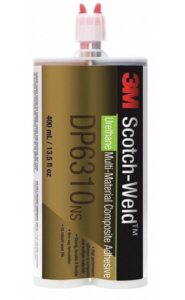
Where there is a need for greater flexibility and energy absorption, the 3M Scotch-Weld DP6310NS Composite Urethane Adhesive is a suitable alternative. This is a two-part polyurethane adhesive designed primarily for composite and multi-material assemblies. It works well when joining fiberglass or carbon-fiber composites to plastics, metals, or wood. It responds well to vibration, impact, or differences in thermal expansion.
If the 20-minute working time for DP420 is too short, you may prefer to opt for Scotch Weld DP460NS, which is a non-sag, toughened two-part structural epoxy for composites. This is true when additional time is needed, such as for a scarf joint or stepped lap repair.
Best Glue for Dissimilar Materials
Dissimilar materials mean two adherends that are made from different materials such as metal to wood or plastic to metal. For wood to steel or a cured fiberglass or carbon-fiber composite, 3M Scotch Weld DP420 is a useful structural epoxy to consider. 3M lists wood, metals, and many composites as suitable materials for its use. Follow proper surface preparation guidelines and consult the manufacturer’s technical data for further instructions.
If the two adherends need to retain some flexibility, a structural urethane adhesive will be more suitable than a stiff epoxy. The 3M Scotch-Weld DP6310NS is a flexible adhesive for composites, plastics, metal, and wood.
For polypropylene or polyethylene to steel a two-part structural acrylic is suitable for low-surface energy plastics and metal. 3M DP8005 is a suitable formulation for this option.
How to Select the Right Lap Joint Adhesive
The first step to selecting the right lap joint adhesive is to identify the adherends correctly. Record the wood species and moisture condition, metal alloy and coating, plastic resin code and additives, or composite matrix and surface finish.
Following that step, define the service conditions. Specify the joint’s minimum and maximum temperature, moisture exposure, chemicals, sunlight, vibration, impact, expected life, and whether the load is brief, repeated, or continuously applied.
Next, examine the load path and geometry. Examine whether the overlap carries the load in shear or if there is any peel or cleavage stress. Measure the bonding surface area, adherend thickness, stiffness, and alignment.
Subsequently, define the manufacturing process by considering the number of joints, mixing equipment, open time, fixture time, cure temperature, clamping availability, surface preparation controls, operator training, and inspection.
Finally, consult the technical data for products intended for both substrates and make representative tests before actual application. Reevaluate the assembly once bonded.
Conclusion
The best glue for lap joints is the adhesive that best matches the materials, geometry, manufacturing process, and service environment. Indoor wood responds well to PVA glue while water-resistant PVA is appropriate for outdoor wood applications. Structural epoxy is suitable for metal, composites, mixed materials, and controlled gaps.
Structural acrylic is good for use in many production metals and plastic bonds. Polyethylene and polypropylene, which are special plastics, require a specialized low-surface energy plastic adhesive.
Adhesive selection is one part of the total assembly. The overlap still must provide a sensible load path. Choosing the strongest adhesive may not suffice unless other factors such as joint geometry and bond-line thickness are controlled. Representative testing is always recommended to confirm that a prototype is capable of producing a sufficient bond.
